
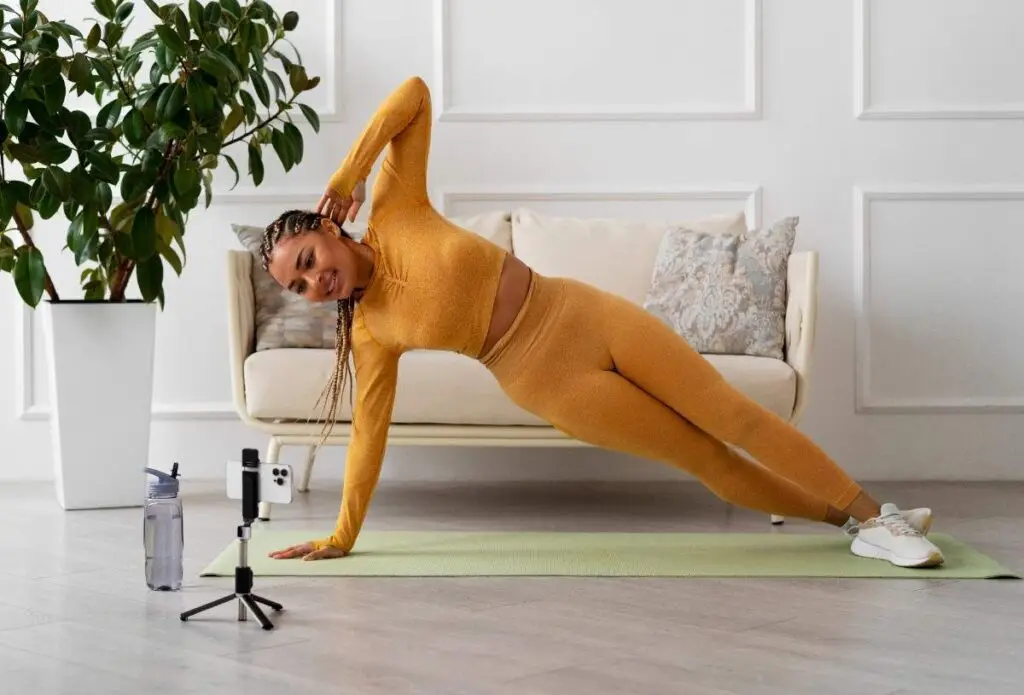

The first time a client tells me “I only have thirty minutes and I want it to count,” I don’t reach for a body-part split. I reach for a full body workout because when time is tight, training your whole body in one session beats chasing individual muscles across five different days you might not actually show up for.
If you’ve searched for the best full body workout exercises, you’ve probably hit a wall of generic lists that tell you what to do but not why, how often, or how to actually structure it. After 20+ years coaching people through exactly this problem, here’s the version I wish I’d found when I started: ten exercises that genuinely earn their place, backed by real research, plus the routine to put them into.
Quick Answer
A full body workout trains all your major muscle groups — legs, back, chest, shoulders, arms, and core — in a single session, typically 3–4 times a week. The 10 best exercises for this are squats, deadlifts, push-ups, pull-ups, lunges, planks, rows, overhead presses, kettlebell swings, and burpees, because each one recruits multiple muscle groups at once.
What Is a Full Body Workout, and Why Does It Work?
A full body workout trains every major muscle group — legs, back, chest, shoulders, arms, and core — in one session, instead of splitting your week into “leg day” and “arm day.” Think of it less like a single-course meal and more like a balanced plate: you’re getting a bit of everything every time you sit down to train.
For beginners and busy people, that’s not a compromise — it’s often the smarter choice. Because you’re hitting each muscle group more frequently across the week, you get more total practice with the movement patterns that actually build strength, and you’re less likely to lose progress if you miss a session or two.
The Science Behind It
The CDC’s Physical Activity Guidelines for Americans recommend adults get at least 150 minutes of moderate-intensity aerobic activity weekly, plus muscle-strengthening activity that works all major muscle groups on 2 or more days a week. A well-built full body workout checks that second box in the most direct way possible — one session, every muscle group, done.
Here’s the part that surprises most people: only about 1 in 4 adults actually meet both the aerobic and strength guidelines together. That’s not a motivation problem for most of them — it’s a structure problem. Full body training removes a lot of the guesswork about “which muscles am I supposed to hit today,” which is exactly why it tends to stick better for beginners.
Note
If you have a chronic health condition — heart disease, arthritis, or diabetes, for example — talk with your doctor before starting a new strength routine. That’s standard, sensible advice, not a formality.
The 10 Best Full Body Workout Exercises
These ten cover every major movement pattern — push, pull, hinge, squat, and carry — which is really the whole point of full body training. Miss a pattern, and you leave a gap somewhere in your strength.
1. Squat
The squat trains your quads, glutes, hamstrings, and core in one motion. Coaching cue: sit back like you’re reaching for a chair behind you, keep your chest tall, and drive through your heels.
2. Deadlift
If I had to pick one exercise to keep for the rest of my life, it’s this one. It trains your entire posterior chain — hamstrings, glutes, back — and carries directly into everyday life, like picking up a suitcase without tweaking your back.
3. Push-Up
Chest, shoulders, triceps, and core, no equipment required. Beginners: drop to your knees or elevate your hands on a bench until full reps feel controlled, not shaky.
4. Pull-Up (or Assisted Row)
Your back and biceps rarely get enough direct attention, and a weak back is where a lot of posture complaints start. Can’t do a full pull-up yet? A resistance-band-assisted version or a bent-over row covers the same pattern.
5. Lunge
A single-leg movement that trains balance alongside strength — something a bilateral squat can’t fully replicate. Great for catching left-right imbalances most people don’t know they have.
6. Plank
Your core’s job isn’t to crunch — it’s to resist movement and keep your spine stable. The plank trains exactly that, and it transfers directly into every other lift on this list.
7. Dumbbell Row
A second pulling movement, this time single-arm, which also challenges your core to resist rotation. Underrated for building a strong, injury-resistant back.
8. Overhead Press
Shoulders, triceps, and core stability, standing tall. This is also a quiet posture fix — weak shoulders and a rounded upper back tend to go together.
9. Kettlebell Swing
Part strength, part cardio. The hip-hinge power behind a good swing trains your glutes and hamstrings while your heart rate climbs — efficient in a way few other single exercises manage.
10. Burpee
Not anyone’s favorite, but it earns its spot: squat, plank, push-up, and jump in one fluid sequence. A little goes a long way — you don’t need 50 of these to feel it working.
Sample Full Body Workout Routine
Here’s a simple full body workout routine you can run 3 days a week, with a rest or light-activity day between sessions:
| Exercise | Sets | Reps |
|---|---|---|
| Squat | 3 | 10–12 |
| Push-Up | 3 | 8–12 |
| Dumbbell Row | 3 | 10–12 per side |
| Lunge | 2 | 10 per leg |
| Plank | 3 | 30–45 sec |
Rest 60–90 seconds between sets. As it gets easier, add a set, add reps, or add light weight — that’s called progressive overload, and it’s the actual engine behind getting stronger, not just “working harder.”
Full Body Workout at Home vs. at the Gym
A full body workout at home works just as well as a gym session for building a strength foundation — the difference is mostly about how far you can progress before you need more resistance than your body weight or a pair of dumbbells can give you.
| Factor | At Home | At the Gym |
|---|---|---|
| Equipment needed | Minimal to none | Full range available |
| Best for | Beginners, busy schedules | Progressing past bodyweight |
| Long-term ceiling | Lower without added weight | Higher, more load options |
Common Mistakes I See Constantly
- Skipping the warm-up. Five minutes of easy movement isn’t optional — it’s the difference between a good session and a tweaked lower back.
- Training to failure every set. Grinding out every rep to the max wears you down faster than it builds you up.
- Ignoring form for more weight. A smaller, clean rep beats a bigger, sloppy one — every single time.
- No rest days. Muscle grows during recovery, not during the workout itself.
Myths vs. Facts
Myth: Full body workouts are only for beginners.
Fact: Advanced lifters use full body training too — it’s a legitimate long-term approach, not just a starting point you graduate from.
Myth: You need to train every day to see results.
Fact: 3–4 sessions a week, done consistently, outperforms daily training that burns you out by week three.
Tip: If you’re brand new to strength training, spend your first two weeks on form alone, with light or no weight. It feels slow. It isn’t — it’s the fastest route to actual progress.
Frequently Asked Questions
A. Most people do best with 3–4 full body sessions a week, spaced with at least one rest or light-activity day in between so muscles have time to recover and rebuild.
A. For beginners and time-limited people, generally yes — more frequent practice per muscle group tends to build strength faster early on. Advanced lifters sometimes prefer splits for extra volume per muscle.
A. Yes. Squats, push-ups, lunges, and planks all work with just your body weight, and you can build real strength before you ever need a dumbbell.
A. Thirty to forty-five minutes is plenty for most goals, including warm-up and cool-down — you don’t need two hours to get real results.
A. It can, especially paired with a modest calorie deficit — strength training preserves muscle while you lose fat, which keeps your metabolism working in your favor.
A. For most people, yes, especially in the first one to two years of training. The research on trained lifters shows the difference becomes more relevant only at higher training experience.
A. All the major groups in one session: chest, back, shoulders, arms, core, glutes, and legs.
A. Not recommended. Your muscles need recovery time to actually adapt and get stronger — daily full body training raises injury risk without added benefit for most people.
The Bottom Line
A full body workout isn’t a shortcut — it’s simply an efficient, evidence-backed way to train that fits real life better than most routines do. Ten solid exercises, three to four sessions a week, and the patience to let progressive overload do its job: that’s genuinely all it takes to get stronger, leaner, and more capable in your everyday movement.
Start with the sample routine above, focus on form before load, and give it four to six weeks before you judge the results. That’s usually when clients tell me it finally “clicks” — not because the exercises changed, but because consistency caught up with effort.
If you’re ready to go deeper on the movement side, my guide on cycling for weight loss and my nutrition articles are a good next stop.