
Have you ever walked into the gym unsure of which muscles to train together? You’re not alone. One of the biggest mistakes beginners—and even experienced lifters—make is following a workout plan that doesn’t allow muscles enough time to recover or maximize performance.
Choosing the best muscle group combinations to workout together can make your workouts more efficient, improve recovery, and help you build strength and muscle while reducing the risk of overtraining.
For example, training your chest and triceps together makes sense because many pressing exercises naturally involve both muscle groups. Similarly, pairing your back and biceps allows you to target muscles that work together during pulling movements. Understanding these relationships can help you create a smarter workout routine rather than randomly selecting exercises.
Research from the American College of Sports Medicine (ACSM) recommends resistance training at least 2–3 times per week, working all major muscle groups while allowing adequate recovery between sessions. Structuring your workouts around complementary muscle groups is one of the easiest ways to follow these recommendations.
If you’re just starting your fitness journey, you may also enjoy our guide on 10 Best Full Body Workout Exercises which introduces beginner-friendly movements that target multiple muscle groups at once.
Why Does Muscle Group Pairing Matter?
Your muscles don’t work in isolation during most exercises. When you perform a push-up, for example, your chest, shoulders, and triceps all contribute to the movement. Likewise, rowing exercises engage your back, biceps, and core simultaneously.
By grouping muscles that naturally work together, you can:
- Improve workout efficiency
- Reduce unnecessary fatigue
- Promote balanced muscle development
- Allow sufficient recovery between sessions
- Enhance strength and performance
A well-planned workout split can also help you stay consistent, as you’ll know exactly what to train each day instead of making decisions on the spot.
What Are the Different Muscle Groups?
Before deciding which muscles to train together, it’s important to understand the major muscle groups in the human body.
These muscle groups can generally be divided into upper body, lower body, and core.
Upper Body Muscle Groups
1. Chest (Pectorals)
The chest muscles are responsible for pushing movements and are commonly trained using exercises such as:
- Bench Press
- Push-Ups
- Chest Flyes
The chest frequently works alongside the shoulders and triceps.
2. Back
Your back contains several large muscles, including the latissimus dorsi, trapezius, and rhomboids.
Common back exercises include:
- Pull-Ups
- Lat Pulldowns
- Bent-Over Rows
- Seated Cable Rows
The back naturally works with the biceps during pulling exercises.
3. Shoulders (Deltoids)
The shoulders consist of three heads:
- Front (Anterior)
- Side (Lateral)
- Rear (Posterior)
Strong shoulders improve posture, stability, and upper-body strength.
Popular shoulder exercises include:
- Shoulder Press
- Lateral Raises
- Front Raises
- Face Pulls
4. Arms
Your arms primarily include:
Biceps
Responsible for elbow flexion.
Exercises:
- Dumbbell Curls
- Hammer Curls
- Barbell Curls
5. Triceps
Responsible for elbow extension.
Exercises:
- Triceps Pushdowns
- Dips
- Skull Crushers
Lower Body Muscle Groups
1. Quadriceps
Located at the front of the thigh.
Primary functions:
- Knee extension
- Squatting
- Running
Exercises:
- Squats
- Leg Press
- Lunges
2 Hamstrings
Located at the back of the thigh.
Functions:
- Knee flexion
- Hip extension
Exercises:
- Romanian Deadlifts
- Leg Curls
- Good Mornings
3. Glutes
The glute muscles are among the strongest muscles in the body.
Benefits of strengthening them include:
- Improved posture
- Better athletic performance
- Increased lower-body power
Exercises:
- Hip Thrusts
- Squats
- Deadlifts
- Bulgarian Split Squats
4. Calves
Calf muscles assist with walking, running, and jumping.
Exercises:
- Standing Calf Raises
- Seated Calf Raises
- Jump Rope
Core Muscles
A strong core provides stability for nearly every movement.
Your core includes:
- Rectus Abdominis
- Obliques
- Transverse Abdominis
- Lower Back Muscles
Core exercises include:
- Planks
- Dead Bugs
- Bicycle Crunches
- Mountain Climbers
For more ideas, explore our article on Best Core Exercises for Strength and Stability.
💡 Health Tip
Don’t focus only on the “mirror muscles” like your chest and biceps. Training your back, glutes, and core helps improve posture, reduces the risk of injury, and supports better overall movement.
What Are the Different Exercise Types?
Understanding exercise types is just as important as knowing your muscle groups. Most strength-training exercises fall into one of two categories:
- Compound exercises
- Isolation exercises
Both play valuable roles in a balanced workout program.
Compound Exercises
Compound exercises involve multiple joints and multiple muscle groups working together in a single movement.
Because they recruit more muscles, compound exercises generally allow you to lift heavier weights and burn more calories.
Examples of Compound Exercises
- Squats
- Deadlifts
- Bench Press
- Pull-Ups
- Push-Ups
- Lunges
- Overhead Press
- Rows
Benefits of Compound Exercises
- Improve functional strength
- Burn more calories
- Increase coordination
- Save workout time
- Stimulate greater muscle growth
Compound movements should form the foundation of most workout programs.
Isolation Exercises
Isolation exercises target one specific muscle group while minimizing assistance from other muscles.
These are useful for correcting muscle imbalances and adding extra volume to a workout.
Examples of Isolation Exercises
- Biceps Curl
- Triceps Extension
- Leg Extension
- Leg Curl
- Lateral Raise
- Calf Raise
- Chest Fly
Benefits of Isolation Exercises
- Improve muscle definition
- Target weak muscles
- Enhance mind-muscle connection
- Assist rehabilitation after injury
💡 Health Tip
Build your workout around compound exercises first, then finish with isolation exercises to target specific muscles. This approach helps maximize energy, strength, and workout efficiency.
Best Muscle Group Combinations to Workout Together
Now that you understand the major muscle groups and the difference between compound and isolation exercises, the next step is learning the best muscle group combinations to workout together.
The right workout split can help you:
- 💪 Build more muscle
- 🔥 Increase workout intensity
- ⏱ Save time in the gym
- 🛌 Improve muscle recovery
- 📈 Prevent overtraining
Since many exercises naturally recruit secondary muscle groups, pairing muscles that work together allows you to train more efficiently while maximizing strength and muscle growth.
Why Pair Certain Muscle Groups Together?
During compound exercises, your body rarely uses just one muscle.
For example:
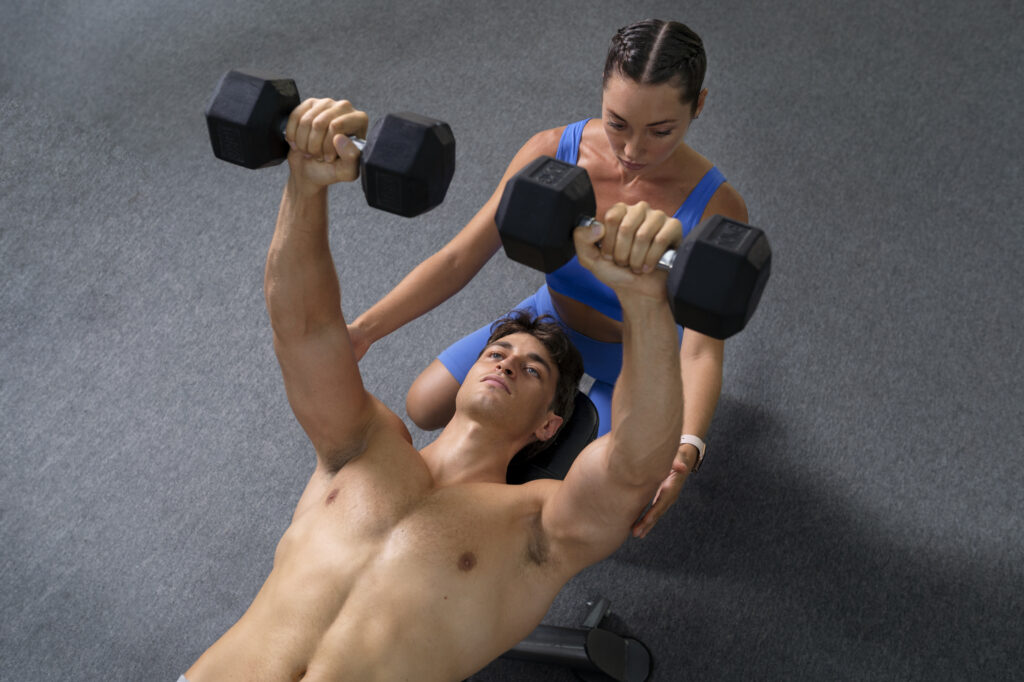
- A bench press primarily targets the chest but also activates the shoulders and triceps.
- A pull-up mainly works the back while heavily involving the biceps.
- A squat trains the quadriceps, glutes, hamstrings, and core simultaneously.
By organizing workouts around these natural movement patterns, you reduce unnecessary fatigue and improve recovery.
💡 Health Tip
Aim to leave 48–72 hours before training the same muscle group again. Recovery is when muscles repair and grow stronger.
Best Muscle Group Pairings
1. Chest and Triceps
This is one of the most popular workout combinations.
Every pressing movement for the chest also recruits the triceps.
Why They Work Well Together
- Similar pushing movements
- Better workout efficiency
- Improved muscle fatigue management
Best Exercises
| Chest | Triceps |
|---|---|
| Bench Press | Triceps Pushdown |
| Incline Dumbbell Press | Skull Crushers |
| Push-Ups | Overhead Extension |
| Chest Fly | Bench Dips |
2. Back and Biceps
Back exercises naturally involve pulling movements.
Since the biceps assist during pulling exercises, pairing them together creates an effective workout.
Benefits
- Improved pulling strength
- Better grip endurance
- Balanced upper-body development
Best Exercises
| Back | Biceps |
|---|---|
| Pull-Ups | Barbell Curl |
| Bent-Over Rows | Hammer Curl |
| Lat Pulldown | Concentration Curl |
| Seated Cable Row | EZ-Bar Curl |
3. Shoulders and Core
Although shoulders can be trained alongside chest, dedicating a workout to shoulders and core improves posture and stability.
Benefits
- Better balance
- Improved overhead strength
- Stronger abdominal muscles
Exercises
- Shoulder Press
- Lateral Raise
- Rear Delt Fly
- Face Pull
- Plank
- Russian Twist
- Hanging Leg Raise
4. Legs (Quadriceps, Hamstrings, Glutes & Calves)
Many fitness professionals recommend training the entire lower body in one workout because the muscles work together during walking, running, jumping, and squatting.
Best Exercises
- Squats
- Romanian Deadlifts
- Leg Press
- Bulgarian Split Squats
- Hip Thrust
- Walking Lunges
- Standing Calf Raises
💡 Health Tip
Don’t skip leg day! Strong legs improve athletic performance, balance, posture, and daily functional movements.
Best Muscle Group Combinations for Beginners
If you’re new to strength training, a simple workout split is easier to follow and allows your body to recover properly.
Option 1: Full-Body Workout (Recommended)
Train all major muscle groups 2–3 times per week.
Sample Workout
- Squat
- Push-Up
- Row
- Shoulder Press
- Plank
This approach builds strength while improving movement patterns.
Option 2: Upper Body / Lower Body Split
Monday
Upper Body
Tuesday
Lower Body
Wednesday
Rest
Thursday
Upper Body
Friday
Lower Body
Benefits:
- Easy recovery
- Balanced training
- Excellent for beginners
Best Muscle Group Combinations for Advanced Lifters
Once you’ve built a solid foundation, increasing training frequency can improve muscle growth.
1. Push / Pull / Legs (PPL)
One of the most popular workout splits.
2. Push Day
Works:
- Chest
- Shoulders
- Triceps
Exercises
- Bench Press
- Shoulder Press
- Dips
- Incline Press
3. Pull Day
Works:
- Back
- Biceps
- Rear Delts
Exercises
- Deadlift
- Pull-Up
- Barbell Row
- Face Pull
5. Legs Day
Works
- Quadriceps
- Hamstrings
- Glutes
- Calves
Exercises
- Squats
- Lunges
- Hip Thrust
- Romanian Deadlift
- Calf Raise
Push Pull Legs Benefits
- ✔ High training volume
- ✔ Excellent muscle recovery
- ✔ Great for muscle growth
- ✔ Suitable for intermediate and advanced lifters
Weekly Workout Schedule Organized by Muscle Groups
Here’s an example of how you could structure your weekly schedule:
Monday: arms and shoulders
- push-ups: 3 sets of 8 reps
- biceps curls: 3 sets of 8 reps
- shoulder press: 3 sets of 10 reps
- bench dips: 2 sets of 12 reps
- lateral raises: 3 sets of 10 reps
Wednesday: legs
- barbell back squats: 3 sets of 8 reps
- dumbbell lunges: 2 sets of 10 reps
- Romanian deadlifts: 3 sets of 8 reps
- step-ups: 2 sets of 12 reps
- calve raises: 3 sets of 12 reps
Friday: back, chest, and abdominals
- dumbbell bench press: 3 sets of 8 reps
- dumbbell fly: 3 sets of 8 to 10 reps
- bicycle crunches: 3 sets of 20 reps
- one-arm dumbbell rows: 3 sets of 8 reps
- dumbbell bent-over rows: 3 sets of 8 reps
- crunches: 3 sets of 20 reps
💡 Health Tip
Schedule at least one full rest day each week. Recovery supports muscle repair, helps reduce fatigue, and lowers the risk of overtraining.
What Are the Different Forms of Resistance Training?
Resistance training isn’t limited to barbells and dumbbells. Using a variety of resistance methods can improve strength, coordination, and long-term adherence to your fitness routine.
1. Free Weights
Examples:
- Dumbbells
- Barbells
- Kettlebells
Benefits:
- Improve balance and coordination
- Allow natural movement patterns
- Build functional strength
2. Resistance Machines
Examples:
- Leg Press
- Chest Press
- Cable Machine
- Smith Machine
Benefits:
- Beginner-friendly
- Controlled movement
- Lower balance demands
3. Bodyweight Training
Examples:
- Push-Ups
- Squats
- Burpees
- Lunges
- Planks
Benefits:
- No equipment required
- Great for home workouts
- Improves functional fitness
Read our guide on How to Do a Burpee for Weight Loss for one of the best bodyweight exercises.
4. Resistance Bands
Benefits:
- Portable
- Joint-friendly
- Excellent for rehabilitation
- Adds progressive resistance
Resistance Training Comparison
| Type | Equipment | Best For |
|---|---|---|
| Free Weights | Dumbbells, Barbells | Strength & Muscle Growth |
| Machines | Gym Equipment | Beginners |
| Bodyweight | None | Home Workouts |
| Resistance Bands | Bands | Mobility & Rehabilitation |
Best Exercises for Each Muscle Group
| Muscle Group | Best Exercises |
|---|---|
| Chest | Bench Press, Push-Up, Chest Fly |
| Back | Pull-Up, Row, Deadlift |
| Shoulders | Overhead Press, Lateral Raise |
| Biceps | Curl, Hammer Curl |
| Triceps | Pushdown, Skull Crushers |
| Legs | Squat, Lunge, Leg Press |
| Glutes | Hip Thrust, Romanian Deadlift |
| Calves | Calf Raise |
| Core | Plank, Bicycle Crunch |
💡 Health Tip
Aim for 7–9 hours of quality sleep each night, as muscle repair and recovery primarily occur while you rest.
When to Talk With a Fitness Professional
While many people can safely follow a structured workout plan, professional guidance may be beneficial if you:
- Are completely new to resistance training
- Have chronic joint pain or injuries
- Have diabetes, heart disease, or high blood pressure
- Experience persistent pain during exercise
- Want to compete in bodybuilding or powerlifting
- Need personalized coaching to reach specific goals
A qualified fitness professional can help assess your movement, adjust your program, and ensure you’re progressing safely.
Frequently Asked Questions (FAQs)
Q. What are the best muscle group combinations to workout together?
Chest + Triceps
Back + Biceps
Shoulders + Core
Legs (Quadriceps, Hamstrings, Glutes, Calves)
These pairings follow natural movement patterns and support efficient training.
Q. Is it okay to train chest and biceps together?
Q. Is Push Pull Legs the best workout split?
Q.How many muscle groups should I train in one workout?
Q. How much protein should I eat to support muscle growth?
Q. Can I train the same muscle every day?
Q. What is the best workout split for muscle growth?
Push/Pull/Legs (6 days)
Upper/Lower Split (4 days)
Full-Body Split (3 days)
The best choice depends on your experience, recovery, and schedule.
Key Takeaways
- ✔ Train muscles that naturally work together.
- ✔ Build your workouts around compound exercises.
- ✔ Add isolation exercises to strengthen weaker muscles.
- ✔ Allow 48–72 hours of recovery before retraining the same muscle group.
- ✔ Eat enough protein and prioritize sleep to support muscle growth.
- ✔ Choose a workout split that fits your schedule and experience level.
Consistency matters more than following the “perfect” workout split.
The Bottom Line
Finding the best muscle group combinations to workout together can make your training more effective, improve recovery, and help you build strength more efficiently. Whether you’re a beginner using a full-body routine or an experienced lifter following a Push/Pull/Legs split, the key is to balance training intensity with adequate recovery and proper nutrition.
Remember that the best workout plan is one you can follow consistently. Focus on good form, progressively challenge your muscles, and give your body time to recover. Over weeks and months, these habits lead to lasting improvements in strength, muscle growth, and overall fitness.