

Introduction
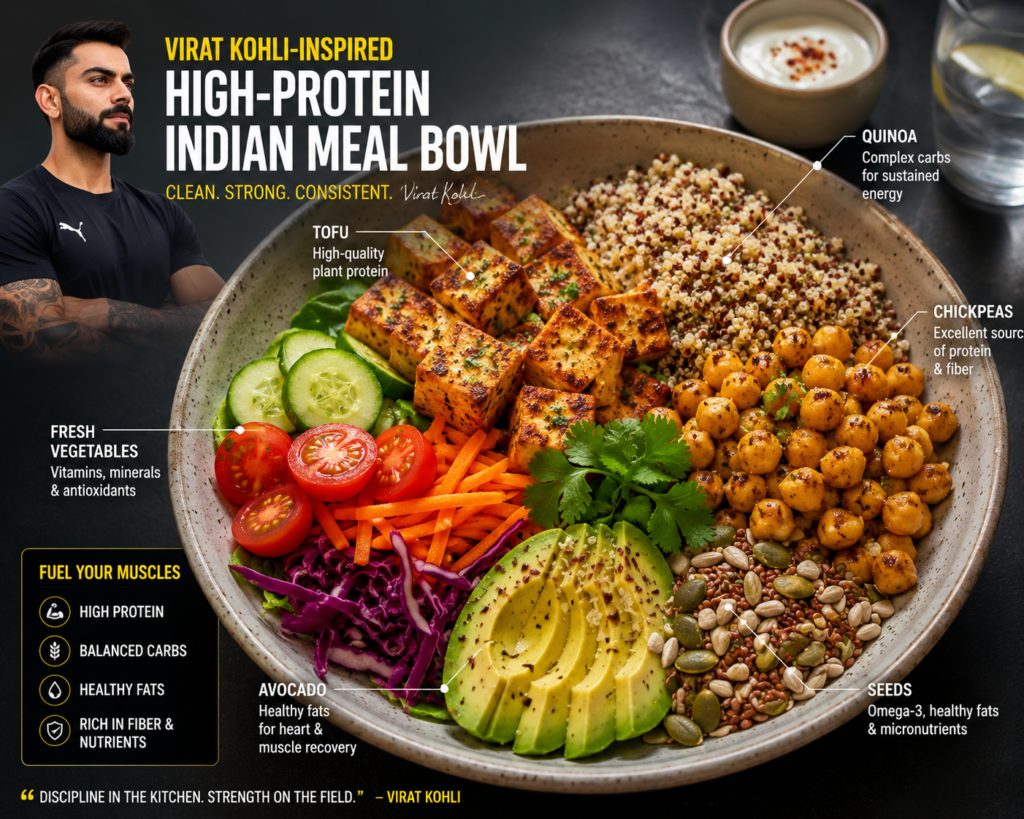
When it comes to fitness inspiration, Virat Kohli is one of the first names that comes to mind. His remarkable transformation from a talented cricketer to one of the world’s fittest athletes didn’t happen overnight—it was driven by years of disciplined training and mindful eating. Inspired by the protein-packed bowl recently highlighted in Indian media, this article explains how to make Virat Kohli highest-protein Indian meal, why it works, and how you can customize it to meet your own fitness goals. Whether you’re trying to build muscle, lose weight, or simply eat healthier, this balanced bowl is a delicious addition to your weekly meal plan.
One of the biggest reasons behind his impressive physique is his focus on high-protein Indian meals made with simple, wholesome ingredients. Rather than relying on expensive supplements or complicated recipes, Kohli’s eating philosophy revolves around nutrient-dense whole foods that support muscle recovery, sustained energy, and overall health.
What Makes Virat Kohli’s Diet Different?
Virat Kohli has publicly shared that he follows a predominantly vegetarian diet focused on clean, minimally processed foods. His meals emphasize:
- High-quality plant proteins
- Fresh seasonal vegetables
- Complex carbohydrates
- Healthy fats
- Adequate hydration
Instead of eating for taste alone, his meal choices are designed to fuel performance, improve recovery, and support long-term health.
Health Tips
Aim to include 20–30 grams of protein in every main meal to help support muscle repair and keep you feeling full for longer.
Ingredients Required for Virat Kohli’s High-Protein Indian Bowl
This recipe serves one large meal bowl.

Protein Base
- 150 g grilled tofu (or paneer if preferred)
- ½ cup cooked chickpeas
- ½ cup cooked quinoa
- ½ cup boiled edamame (optional but highly recommended)
Fresh Vegetables
- ½ cup cucumber, diced
- ½ cup tomatoes, chopped
- ½ cup carrots, grated
- ½ cup bell peppers, sliced
- Mixed lettuce or spinach
- Red cabbage, shredded
Healthy Fats
- ¼ avocado, sliced
- 1 tablespoon roasted pumpkin seeds
- 1 tablespoon chia seeds
- 1 tablespoon flaxseeds
Dressing
- 1 tablespoon olive oil
- Juice of half a lemon
- Black pepper
- Himalayan pink salt
- Roasted cumin powder
- Fresh coriander leaves
According to the Harvard T.H. Chan School of Public Health’s Healthy Eating Plate, building meals around vegetables, whole grains, healthy fats, and quality protein supports long-term health.
How to Make Virat Kohli’s Highest-Protein Indian Meal
Step 1
- Cook quinoa according to the package instructions and allow it to cool slightly.
Step 2
- Pan-grill tofu with a pinch of turmeric, black pepper, and paprika until lightly golden.
Step 3
- Boil chickpeas if using dried ones or rinse canned chickpeas thoroughly.
Step 4
- Wash and chop all vegetables into bite-sized pieces.
Step 5
- Arrange quinoa as the base of the bowl.
Step 6
- Layer tofu, chickpeas, vegetables, avocado, and edamame over the quinoa.
Step 7
- Sprinkle pumpkin seeds, chia seeds, and flaxseeds on top.
Step 8
- Whisk together olive oil, lemon juice, cumin, pepper, and salt, then drizzle over the bowl.
Step 9
- Garnish with fresh coriander and serve immediately.
Why This High-Protein Bowl Works
This meal isn’t just rich in protein—it provides a balanced mix of nutrients that support overall wellness.
Complete Protein Sources
- Tofu, quinoa, chickpeas, and edamame combine to provide essential amino acids that help maintain and repair muscle tissue.
High in Fiber
- Vegetables, legumes, and seeds provide dietary fiber, which supports digestive health and promotes satiety.
Healthy Fats
- Avocado and seeds supply heart-healthy unsaturated fats that aid nutrient absorption and help reduce inflammation.
Slow-Digesting Carbohydrates
- Quinoa and chickpeas release energy gradually, helping to maintain stable blood sugar levels and sustained performance throughout the day.
Health Tips
Adding lemon juice to your bowl enhances iron absorption from plant-based foods, making this meal even more nutritious.
Nutritional Value (Approximate Per Bowl)
| Nutrient | Amount |
|---|---|
| Calories | 680–720 kcal |
| Protein | 42–46 g |
| Carbohydrates | 48–55 g |
| Dietary Fiber | 16–18 g |
| Healthy Fat | 28–32 g |
| Calcium | 350–450 mg |
| Iron | 8–10 mg |
| Omega-3 | 2–3 g |
Notes : Values are approximate and may vary based on ingredient brands and portion sizes.
Health Benefits of This Protein Bowl
Supports Muscle Growth
- With over 40 grams of protein, this bowl provides ample building blocks for muscle repair and growth after workouts.
Helps with Weight Management
- The combination of protein and fiber promotes fullness, which may help reduce overall calorie intake throughout the day.
Boosts Energy
- Complex carbohydrates from quinoa and chickpeas provide a steady release of energy, making this meal ideal before or after exercise.
Promotes Heart Health
- Olive oil, avocado, and seeds contribute healthy fats that support cardiovascular health.
Enhances Gut Health
- A diverse mix of vegetables and legumes supplies fiber that nourishes beneficial gut bacteria.
Can You Customize This Meal?
Absolutely. Here are a few ideas:
- Replace tofu with grilled paneer or tempeh.
- Add sprouts for extra protein.
- Include roasted sweet potato for additional complex carbohydrates.
- Use brown rice instead of quinoa if preferred.
- Add herbs like mint or parsley for fresh flavor.
Expert Tips to Increase Protein Naturally
- Add Greek yogurt as a side.
- Include roasted soy nuts for a crunchy snack.
- Drink a glass of milk or fortified soy milk alongside the meal.
- Pair the bowl with boiled lentils for an extra protein boost.
- Avoid sugary dressings that can add unnecessary calories.
Frequently Asked Questions
Q. Is Virat Kohli completely vegetarian?
Q. How much protein does this bowl contain?
Q. Is this recipe good for weight loss?
Q. Can I make this recipe vegan?
Q. Can beginners eat this meal?
Q. Is quinoa necessary?
Q. Can I prepare this bowl in advance?
Conclusion
Inspired by the clean eating principles associated with Virat Kohli’s diet, this high-protein Indian bowl demonstrates that nutritious eating doesn’t have to be complicated. By combining plant-based proteins, colorful vegetables, healthy fats, and whole grains, you create a meal that supports muscle recovery, sustained energy, and overall well-being.
Whether your goal is building strength, improving athletic performance, or simply making healthier food choices, this protein-packed bowl is a practical and satisfying option. Remember, lasting fitness comes from consistent habits—not extreme diets.
Call to Action
Have you tried making this Virat Kohli-inspired high-protein Indian meal?
Share your experience in the comments below!
If you found this recipe helpful, share it with friends and family, and explore more healthy, protein-rich recipes on Health Wellnessroutine to support your fitness journey.